Fresh Starts and New Life Choices
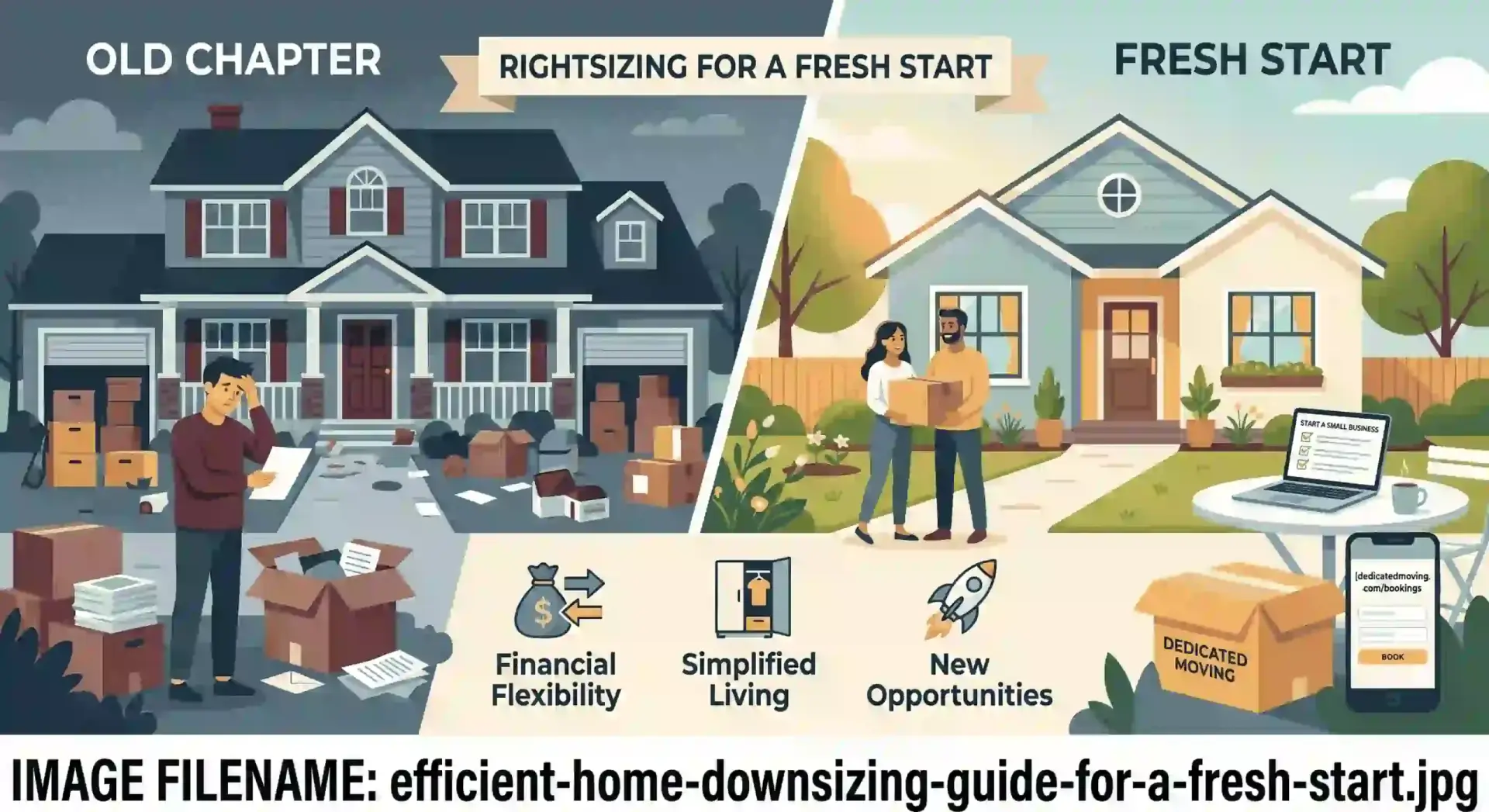
For mid-career homeowners, empty nesters, and busy families who already understand the basics of a move, the toughest part of downsizing isn’t sorting belongings, it’s deciding what the next chapter should support. The tension is real: staying put can feel safe while daily costs, upkeep, and clutter quietly limit options. When approached as a choice, downsizing benefits can create financial flexibility, encourage simplified living, and make room for meaningful lifestyle changes. That’s where fresh start opportunities begin.
Quick Downsizing Takeaways
- Choose downsizing to boost financial flexibility and create room for new opportunities.
- Choose a smaller footprint to simplify daily life and reduce ongoing responsibilities.
- Choose simplified living to focus time and energy on what matters most.
- Choose new lifestyle choices that support positive life changes and fresh starts.
Understanding Why Downsizing Works
Downsizing is not just moving into a smaller place. It is a decision to reduce the ongoing costs, time demands, and mental clutter that come with maintaining too much space and too many things. Many people treat it as rightsizing, meaning you choose a home and lifestyle that fit how you live now.
Why it matters is the compounding effect. Lower fixed expenses can free cash each month, which reduces financial pressure and decision fatigue. With fewer rooms, bills, and obligations, lifestyle simplification often creates calmer days and more energy for relationships, health, and goals.
Picture a household that sells a larger home and moves closer to daily errands. A smaller footprint cuts utilities, repairs, and weekend chores, and the savings start to stack up. That shift can feel like downsizing your home into a more manageable rhythm. With breathing room in place, a simple business idea becomes easier to map and launch step by step.
Use Post-Downsizing Cash Flow to Start a Small Business
When downsizing frees up money and mental bandwidth, that breathing room can become fuel for building something new. Starting a small business can be a fresh start that turns your improved cash flow and sharper focus into a path toward a passion project or a new career direction. Begin by mapping a simple business idea you can explain in one sentence, then decide on a basic formation structure, many new owners choose an LLC for a clear, straightforward setup. From there, you can take the early steps to launch with confidence: make your formation official, stay on top of required compliance, and get the essentials in place so you can spend more time serving customers instead of getting stuck in paperwork. If you want guided, step-by-step help in one place, ZenBusiness can support forming an LLC, managing compliance, creating a website, or handling finances.
Follow a 7-Step Plan to Downsize Without Regrets
Downsizing goes best when you treat it like a short project with clear decisions, not a never-ending cleanout. Use this 7-step plan to right-size your home, protect your budget, and make room for the life you actually want next.
- Define your “fresh start” target in one sentence: Write a simple aim such as “Cut housing costs by $800/month to fund a 12-month runway for my side business.” This keeps decisions consistent when you’re tired or sentimental.
- Measure your next space and set hard limits: Don’t guess, create a basic floor plan and count real storage (closet rods, shelves, garage bays). Assign each category a boundary like “one 6-foot closet for coats” or “two shelves for kitchen appliances.”
- Use a fast decluttering method with a decision timer: Create four bins: Keep, Donate, Sell, Recycle/Trash, and don’t make a fifth “maybe” pile.
- Downsize like a business: keep the ‘best sellers’ and cut the rest: Even Procter & Gamble, rationalizing its product portfolio shows how focusing on fewer, higher-value “core lines” can improve efficiency. Apply the same idea at home!
- Run the numbers before you commit to moving costs: Build a one-page “downsizing budget” with three columns: one-time costs (repairs, movers, deposits), transition costs (double housing for a month, storage), and ongoing savings (new payment, utilities, insurance). This turns downsizing into a controlled cash-flow plan, not a surprise bill.
- Prepare emotionally with a ‘memory plan,’ not a guilt plan: Choose a small, defined memory box per person (for example, one tote) and a rule: keep the story, not the stuff. Take photos of sentimental items you won’t keep, and write a two-line note about why it mattered. If family is involved, schedule one shared “heritage hour” each week so decisions happen with support, not pressure.
- Integrate the new lifestyle in the first 30 days: Make a “Day 1 essentials” kit, then set three routines that match your next chapter. A weekly donation drop-off, a monthly money check-in, and a calendar block for the opportunity you’re creating (training, client outreach, or a part-time role). Downsizing sticks when the new home quickly feels functional, and your calendar reflects the life you downsized for.
Downsizing Q&A: Calmer Choices, Lighter Living
Q: How can downsizing help reduce financial stress and improve money management?
A: A smaller place often means lower rent or mortgage, utilities, and maintenance, which can quickly calm money anxiety. A simple one-page budget check-in on the same day each month keeps progress visible and reduces guesswork.
Q: What are some effective ways to simplify daily routines after moving to a smaller home?
A: Build routines around fewer “reset points”: one landing zone for keys and mail, one laundry day, and a 10-minute nightly tidy. Store items where you use them and keep counters clear so cleanup is automatic.
Q: In what ways can downsizing create opportunities to explore new hobbies or lifestyle choices?
A: When your home takes less time and money to run, you gain room in your calendar and budget to try something new. Choose one low-pressure experiment for 30 days, like a class, volunteering, or a walking group. Treat it as exploration, not a life-long commitment.
Q: How does letting go of excess belongings contribute to a clearer mindset and reduced overwhelm?
A: Fewer items means fewer decisions, less visual noise, and less guilt about unfinished projects. If you feel stuck, use gentle decision-making support by sorting in short sessions and keeping only what fits your current life. Take a photo of sentimental pieces so you keep the memory without carrying the weight.
Build Fresh-Start Momentum Through Simple Downsizing Decisions
It’s hard to imagine a fresh start when your home, schedule, and finances feel crowded at the same time. A positive mindset shift, seeing downsizing as choice and clarity, not just loss, makes embracing change feel practical and even hopeful. When you focus on calmer, lighter decisions. Space opens up for better routines, steadier spending, and a next chapter. That fits your life now.
Downsizing isn’t about having less, it’s about making room for what matters. Pick one small step this week: sell one item, donate a box, set a simple budget check-in, or sketch a plan for what you want next. That kind of action steps builds resilience and stability, one fresh start at a time.
Ready to Start Your Next Chapter?
Whether you are planning a carefully timed downsize or dealing with a sudden timeline shift. Dedicated Moving is here to handle the heavy lifting.
-
Planning Ahead? Get an accurate, hassle-free job estimate and secure your preferred move date in minutes. Request a Free Estimate & Book Your Move
-
Need Emergency Help? Facing a last-minute closing date or an urgent relocation? Reach out directly to our fast-response team for immediate support. Contact Us for Last-Minute Moving Assistance